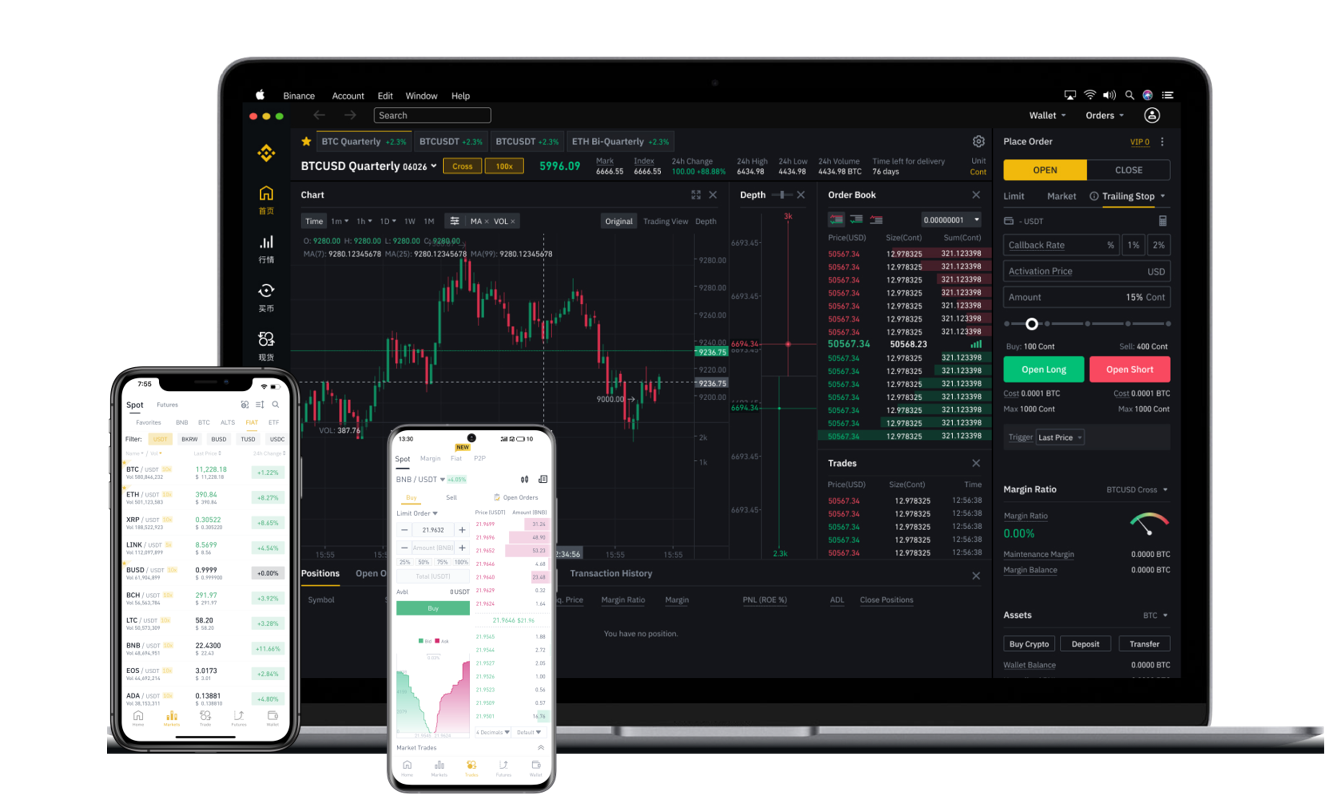
How Many Exchanges Does Binance Operate & How to Use Them: A Complete Guide

Binance is one of the largest and most influential cryptocurrency ecosystems in the world, but many users are confused by a key question: "How many exchanges does Binance actually operate, and how do you access each one?" The short answer is that Binance runs multiple platforms tailored to different regulatory environments and user needs. Understanding these differences is critical for choosing the right platform and avoiding security or compliance issues.
Binance currently operates at least three distinct exchanges: Binance.com (the global exchange), Binance.US (the regulated American version), and Binance Jersey (focused on European markets, though its primary services have largely merged into other regional entities). Additionally, Binance has launched localized platforms in countries like Singapore (Binance.sg) and the Middle East (Binance.ae, formerly Binance Dubai). From a practical standpoint, the two most relevant for most users are Binance.com and Binance.US.
How to operate Binance.com (Global Exchange)
Binance.com is the flagship exchange available to most countries (excluding the United States, Canada, Singapore, and a few others). To start: 1) Visit binance.com and click “Register.” Use a referral code if you have one. 2) Complete identity verification (KYC) by uploading a government ID and completing a facial recognition check. This unlocks higher withdrawal limits and full trading features. 3) Deposit funds via crypto transfer, bank transfer (if available in your region), or credit card. 4) Navigate to “Trade” > “Classic” or “Advanced” to buy or sell coins. Always use the “Spot” tab for standard trading pairs like BTC/USDT.
How to operate Binance.US (For American Users)
Binance.US is a separate company that complies with U.S. federal and state regulations. It has fewer coins and trading pairs than the global exchange but offers a stricter, more secure environment. To use it: 1) Go to binance.us and register. Note that your Binance.com account does not transfer—you must create a new account. 2) Complete a more thorough verification process, often requiring your Social Security number. 3) Deposit U.S. dollars via ACH transfer or wire. 4) Trade on a simplified interface that shows only U.S.-allowed assets, like Bitcoin, Ethereum, and a handful of altcoins. Withdrawal limits and staking features are also more constrained.
How to operate regional Binance platforms (e.g., Binance.sg, Binance.ae)
Binance also maintains country-specific portals for users in places like Singapore (Binance.sg) and Dubai (Binance.ae). These operate similarly to Binance.US—you must create a separate account with local ID proof. The key rule is simple: always use the exchange that corresponds to your country of residence. Attempting to circumvent geoblocks (e.g., using a VPN to access Binance.com from the US) can lead to account freeze or permanent suspension.
Key operational tips across all Binance exchanges
1. Security first: Enable two-factor authentication (2FA) via Google Authenticator or hardware key. Never rely on SMS 2FA alone. 2. Verify the URL: Only use official domains (binance.com, binance.us, etc.). Check for SSL certificates and avoid lookalike phishing sites. 3. Use the right trading mode: Beginners should stick to “Spot” trading and avoid margin or futures until fully familiar. 4. Understand withdrawal rules: Each exchange has different minimum withdrawal amounts and fees. For example, Binance.com charges 0.0005 BTC for a Bitcoin withdrawal, while Binance.US may have higher fees for fiat withdrawals. 5. Regional compliance: If you move to a new country, your account may be restricted. You may need to close your old account and open a new one in your new jurisdiction.
Conclusion
The key takeaway is that Binance is not one exchange but a family of exchanges designed to comply with local laws. The way you operate each platform differs primarily in registration requirements, available assets, and withdrawal processes. Always confirm which exchange you are using and follow the specific steps for that region. For the vast majority of users, checking your country’s access and setting up the correct exchange from the start will save you time, money—and headaches.